The 15 Calendar Signals That Predict Burnout Before You Feel It
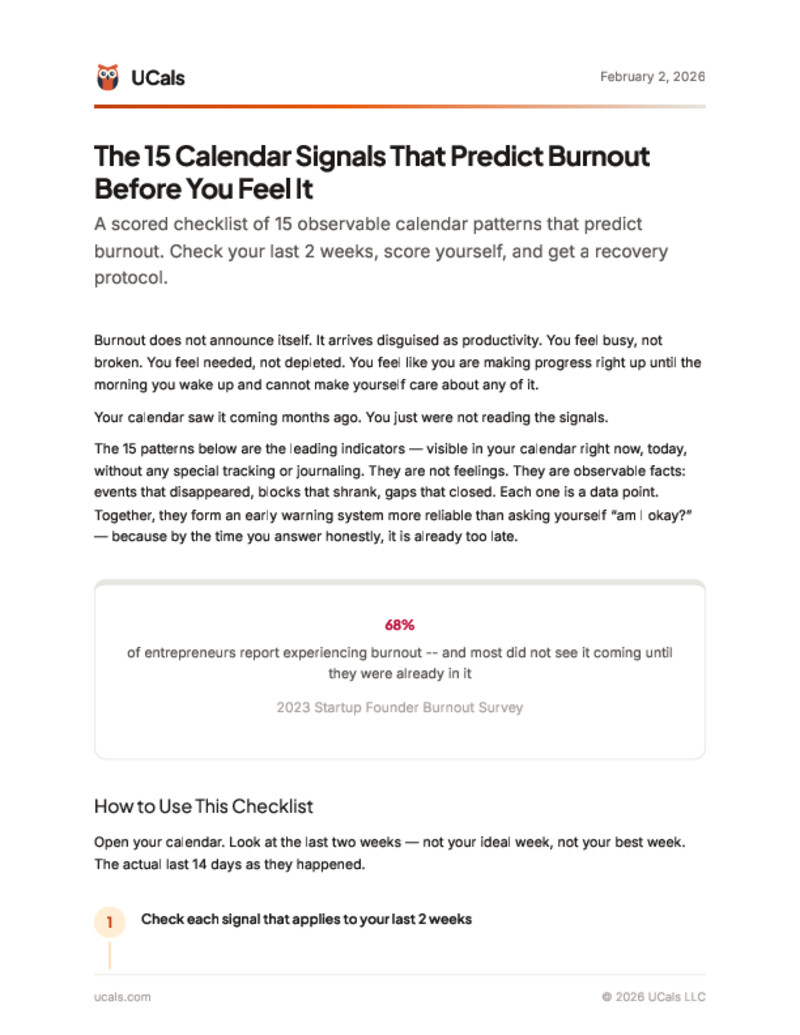
Burnout does not arrive overnight. It sends 15 measurable signals through your calendar weeks before you feel it. This scored checklist turns your last 2 weeks of calendar data into a burnout risk score -- so you can intervene while the fix is still a schedule adjustment, not a medical leave.
What's inside
- 15 evidence-based calendar patterns that predict burnout before you feel it
- Scored assessment: check your last 2 weeks and get a concrete risk level
- The 5 highest-risk signals and what each one means for your health
- A recovery protocol for each risk tier -- from green to red
- The "buffer erosion" metric that catches 80% of burnout trajectories
Free. No spam. Unsubscribe anytime.
Downloaded by 143+ professionals.
Who this is for
- Self-employed professionals who feel "fine" but suspect their schedule is unsustainable
- Founders and freelancers who have burned out before and want an early warning system
- Anyone whose calendar has gotten progressively more packed over the last 3 months
- Partners or friends of someone whose schedule looks concerning
Frequently asked questions
Can your calendar really predict burnout?
Yes. Research on occupational burnout shows that schedule patterns -- meeting density, buffer erosion, weekend work creep, and recovery time compression -- are leading indicators, appearing 4 to 8 weeks before subjective symptoms. Your calendar is an objective record of these patterns. This checklist turns that data into a scored assessment.
What are the early warning signs of burnout on a calendar?
The 15 signals include: back-to-back meetings with no buffers, deep work blocks getting deleted, exercise sessions that never happen, evening work becoming routine, weekend calendar events appearing, lunch breaks disappearing, and sleep blocks shrinking. Each signal is scored and weighted by predictive strength.
How is this different from a regular burnout quiz?
Most burnout assessments ask how you feel -- tired, cynical, detached. This checklist looks at what your calendar shows. Feelings are subjective and often arrive too late. Calendar patterns are objective and measurable weeks before the feelings hit. You are checking data, not self-reporting emotions.
What should I do if my score is high?
The checklist includes a tiered recovery protocol. Low risk: adjust buffers and protect one full day off per week. Medium risk: cancel 30% of non-essential meetings and add recovery blocks. High risk: take a full week of reduced schedule and restructure your calendar before returning to full capacity.
How often should I run this checklist?
Monthly is ideal for maintenance. If you score medium or higher, run it weekly until the score drops. The checklist takes 2 minutes with your calendar open -- the 15 signals are quick to scan once you know what to look for.
Get the free checklist
Enter your email and it's yours.
Free. No spam. Unsubscribe anytime.
Published by UCals team · Last updated February 2, 2026 · 12 min read